When Small Dents and Creases on Your Car Can Be Repaired Without Replacing the Whole Panel
A dented door or fender can look worse than the actual damage. A parking-lot ding, shallow crease, or small impact may leave a very visible mark without seriously damaging the metal underneath. That does not automatically mean the entire body panel has to come off the car.
The repair depends on how the metal moved, whether the paint survived, and where the damage sits on the panel. Some dents can be carefully worked back into shape with little or no refinishing. Others need conventional body repair, but even then, replacing the whole panel may still be unnecessary.
Paintless Dent Repair Works Best When the Paint Is Intact
Paintless dent repair, commonly called PDR, reshapes the original panel without sanding, filling, or repainting it. A technician gradually works the metal back toward its original contour using specialized tools and controlled pressure.
Paint condition matters. If the factory finish hasn't cracked, chipped, or separated from the panel, the original paint has a better chance of staying in place.
At our shop, we also look at the dent's depth and shape. A broad, shallow depression can sometimes respond very well to PDR even when it covers a larger area than a small, sharp dent.
Small Creases Can Sometimes Be Saved Too
A crease does not automatically mean panel replacement. Some creases can be repaired when the metal hasn't been stretched too severely, and there is enough access to work the damaged area.
Creases take more patience because the metal has been folded along a line rather than simply pushed inward. The sharper that line is, the harder it can be to return the panel to its original shape without leaving a visible trace.
Damage along a strong body line can also be harder to fix. Those stamped lines add rigidity to the panel, so moving them back into position requires careful control. We judge each crease by its depth, length, location, and paint condition rather than by size alone.
Where the Dent Is Located Makes a Difference
Two dents that look almost identical from the outside can require different repairs because of what sits behind them. PDR tools need some form of access to the back of the damaged metal, although glue-pulling techniques can sometimes be used from the exterior.
Areas behind heavy reinforcement, wiring, crash beams, or tightly packed structural components may be harder to reach. Damage close to the edge of a door, hood, or fender can also be more challenging because folded panel edges are much stiffer.
Things we look at during an inspection include:
- Whether the paint is cracked or chipped
- How deeply the metal has been pushed
- Whether the panel has been stretched
- How close the damage is to an edge
- Whether a body line runs through the dent
- What access is available behind the panel
- Whether previous body filler or paint is present
Previous repairs can change the approach because pulling or pushing on a panel containing old filler may crack the repaired surface.
When Conventional Body Repair Can Save the Panel
Paintless repair is not the only way to avoid replacing a panel. If the paint is damaged or the dent cannot be completely corrected with PDR, conventional bodywork may still allow us to repair the original part.
That can involve reshaping the metal, preparing the damaged surface, using a limited amount of body filler where appropriate, applying primer, and refinishing the panel. The decision depends on whether the original panel can be restored properly without excessive labor or compromising the quality of the repair.
A repairable fender, door skin, or quarter panel does not need to be discarded simply because paintwork is required. Panel replacement is one option, not the automatic answer to every crease.
Some Damage Does Call for Panel Replacement
At some point, repairing the original metal no longer makes sense. Severe impacts can stretch, tear, buckle, or sharply fold a panel beyond a practical repair.
Replacement becomes more likely when the panel has:
- Torn or split metal
- Severe stretching across a large area
- Heavy damage along several body lines
- Crushed edges or mounting areas
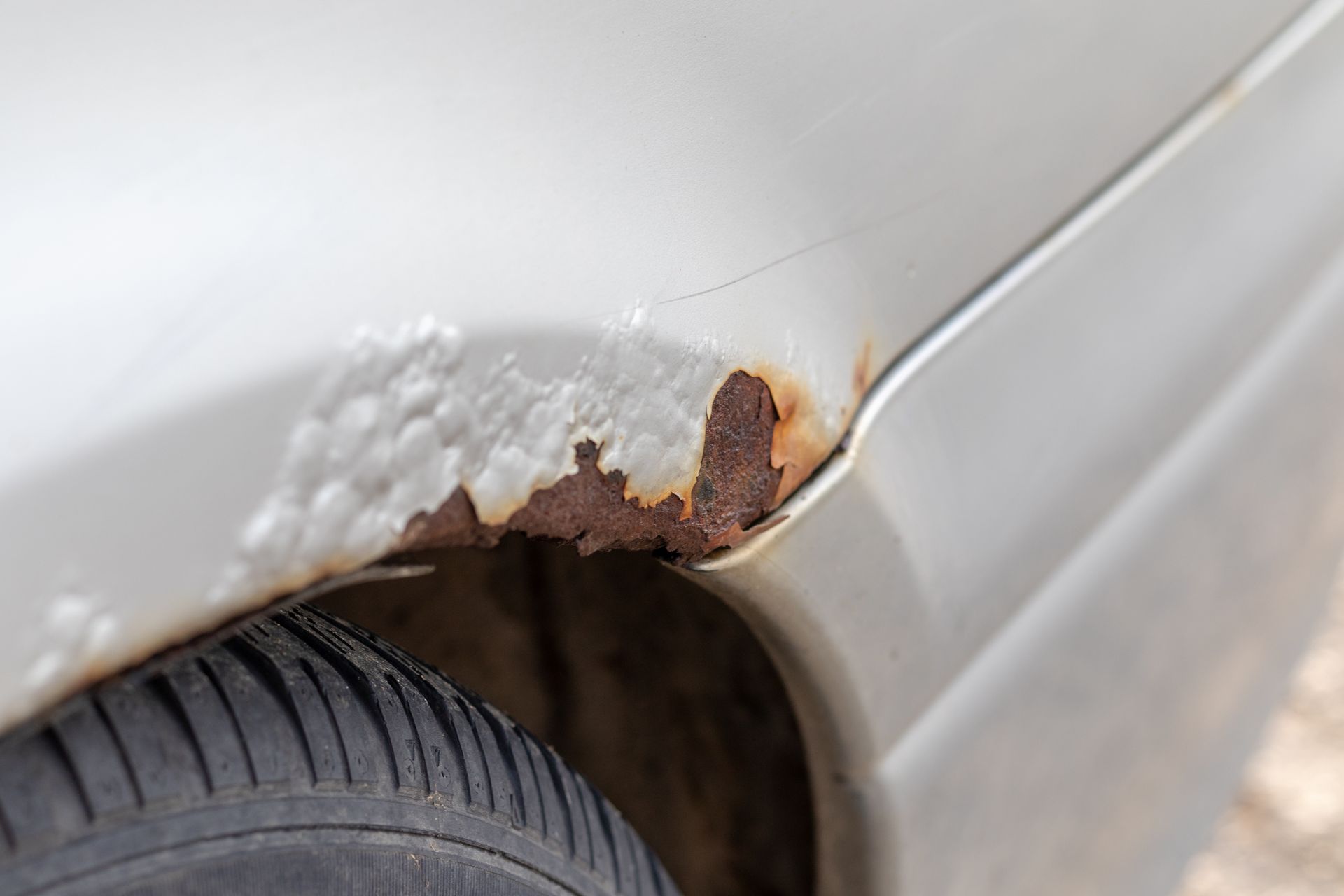
- Extensive corrosion around the damaged section
- Previous repairs that have already weakened the area
Structural damage is another category entirely. If an impact has affected reinforcements, mounting points, or structural sections of the vehicle, the repair has to address much more than the visible dent.
Why a Professional Evaluation Helps
Photos can show the general size of a dent, but they do not always reveal how much the metal has stretched or whether the paint is beginning to fracture. Reflections across the panel often show subtle distortion that is difficult to see in ordinary lighting.
We look at the panel from several angles and consider the least invasive repair that can restore the shape properly. Sometimes that means PDR. Sometimes conventional body repair is the better choice. And when replacement really is necessary, we can explain what makes the original panel a poor candidate for repair.
Get Dent And Body Repair In Cannon Falls, MN, With Nate's Garage - Auto & Body Shop
If your vehicle has a small dent, door ding, or crease, Nate's Garage - Auto & Body Shop in Cannon Falls, MN, can evaluate the damage and determine whether the original panel can be repaired instead of replaced.